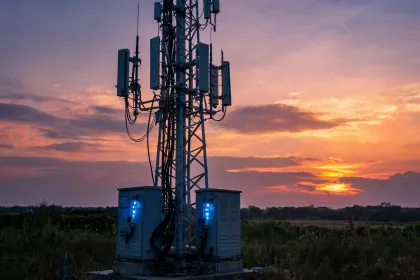
Mobile Operators
5G NR n78, carrier aggregation, and RF optimization for dense urban coverage and lower cell-edge latency.
Qualcomm connects silicon, RF front-end design, on-device inference, and carrier ecosystem programs into wireless platforms built for 10 Gbps class links, Sub-6 and mmWave spectrum, and field-ready IoT scale.
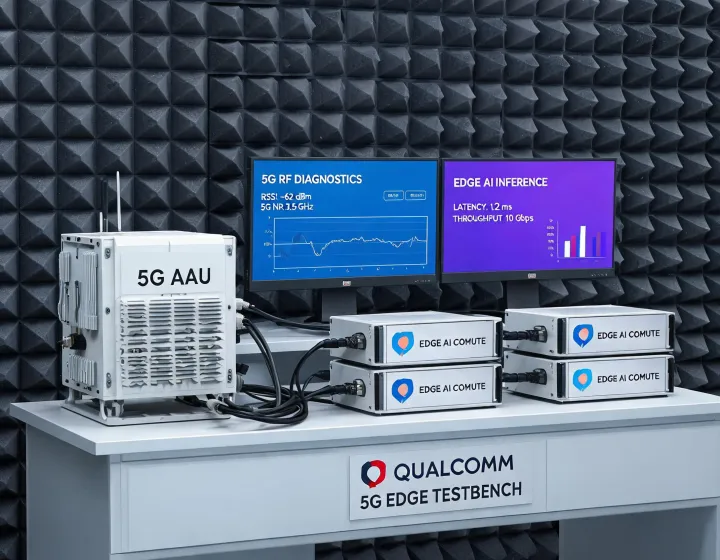
Every capability is framed around measurable telecom behavior: spectrum use, inference latency, RF integrity, timing accuracy, and power budget at the edge.
Coordinate Sub-6 and mmWave channels with scheduling logic for high-throughput handsets, gateways, and fixed wireless CPE.
Shift inference toward the device to reduce uplink traffic, protect local context, and keep response latency below cloud-only patterns.
Plan filters, amplifiers, antenna tuners, and calibration data around clean EVM, lower noise, and repeatable dBm output windows.
Balance low-power radios, secure boot, GNSS timing, and carrier certification for sensors that report for years, not weeks.
Use SyncE and IEEE 1588v2 design assumptions where private 5G cells and Ethernet fabric need deterministic handoff.
Map radio, distributed, and centralized unit interfaces to practical 7.2x split tests before field trials begin.
Qualcomm technology language belongs in devices, carrier networks, campuses, industrial sites, and data centers where bandwidth and latency are business constraints.
5G NR n78, carrier aggregation, and RF optimization for dense urban coverage and lower cell-edge latency.

AI edge traffic, 400G/800G optical paths, and Ethernet fabric telemetry for cloud and accelerator clusters.
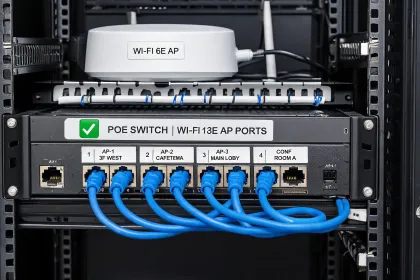
Wi-Fi 6E 6 GHz, PoE++ access, private 5G roaming, and device authentication for high-density buildings.
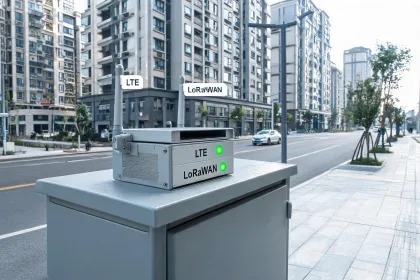
NB-IoT, LoRaWAN 868 MHz, GNSS timing, and low-power telemetry for municipal sensing programs.

Mission-critical voice, resilient backhaul, and priority traffic policies for first responder communications.
The Qualcomm story is rendered as a telecom evolution, with each step tied to a protocol, spectrum layer, or network architecture milestone.
Foundational work in spread-spectrum concepts shaped a long-term view of radio PHY design and mobile efficiency.
Commercial mobile silicon moved 3G data services into handsets with modem integration as the product center.
High-volume LTE platforms connected RF, baseband, and application processors for smartphones and emerging IoT devices.
5G NR modem RF systems extended the platform stack across n78, n258, massive MIMO, and fixed wireless access.
NPUs, private 5G, and distributed inference guide the next cycle of robotics, XR, vehicles, and industrial connectivity.
"The private 5G proof of concept reduced robot command latency by 8 ms while keeping the uplink model traffic local to the site."
Head of RAN Engineering Tier-1 mobile operator"The RF planning package helped our team keep PIM below -158 dBc on the rooftop sector before commercial launch."
RF Optimization Lead Regional tower company"Edge AI offload lowered WAN dependency for computer-vision gateways and gave our NOC clearer device telemetry."
Datacenter Fabric Architect Hyperscale edge platform
Bring required throughput, reach, connector preference, deployment band, and existing MPLS/SR/EVPN protocol assumptions. We will map them into a practical test path.